

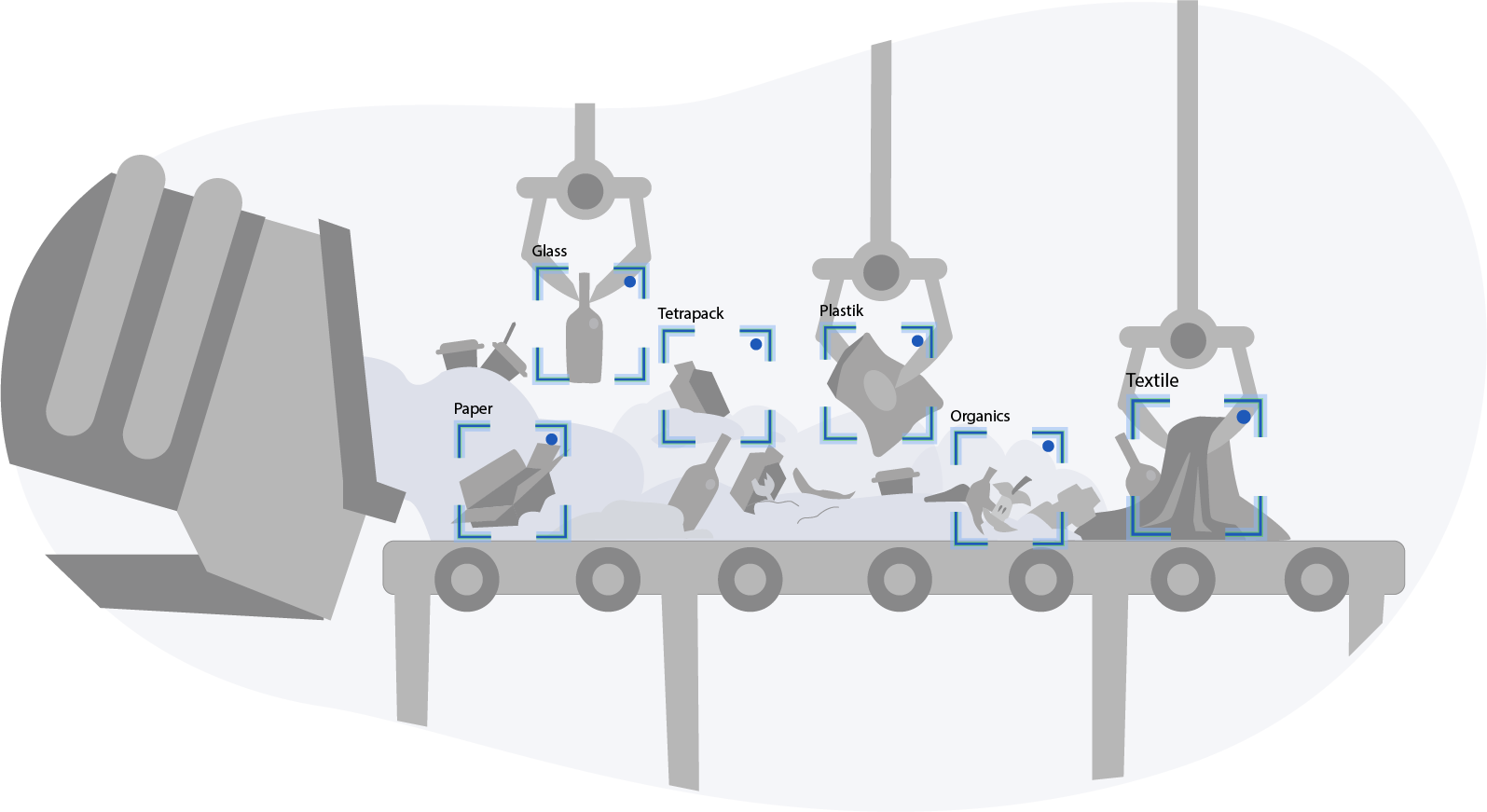
Waste Composition Analysis
Implementation of Video Analytics
Camera installation at the monitoring point
Placement of surveillance cameras on conveyor lines and in sorting areas.
Video stream transmission to the server
Continuous transmission of video data to the server for real-time processing.
Data processing with neural networks
AI algorithms recognize and classify waste into 54 categories with high accuracy.
Saving and analyzing generated reports
Generation of detailed analytical reports to support process optimization decisions.
Sample Analytical Reports
Waste composition in outflow by recyclable groups
Distribution by category per shift
Share of main recyclable types by mass
Top 10 categories for the period
Why True Detection?
Easy and seamless integration
Fast implementation and full compatibility with existing equipment.
Record accuracy and speed
Recognition of 54 waste types with up to 98.7% accuracy in real time.
Increased profitability
Reduced losses and higher volume of correctly sorted recyclables.
Performance monitoring
Objective evaluation of staff performance and identification of process bottlenecks.
Regular and accurate reports
Detailed analytics and statistics to support informed decision-making.
Sorting optimization
Identification of weak points and recommendations for improving sorting processes.
System Benefits
Recognition of 54 waste types
Detailed classification of plastics, paper, metals, glass, textiles, organics, and other categories.
High detection accuracy
The neural network delivers up to 98.7% recognition accuracy even at high conveyor speeds.
Continuous data collection
24/7 monitoring and analysis of the waste flow with no breaks or days off.
No additional resources required
The system runs automatically, requiring no additional staff or manual intervention.